Nascent Digital was a Toronto-based digital product agency. Over two years I worked as lead designer across a wide range of client engagements, taking projects from initial discovery through to shipped product across mobile, web, and dashboard contexts.
Each project was different: different industries, different user bases, different technical constraints. What stayed constant was the process. Research-grounded, systems-oriented design balanced client business goals with the needs of the people actually using the product.
Lead designer on a full mobile redesign of eHarmony's iOS app, covering onboarding, the relationship questionnaire, match browsing, and profile editing. The challenge was mapping a complex, multi-step questionnaire into a mobile-native flow without losing the depth that made eHarmony's matching approach distinct.
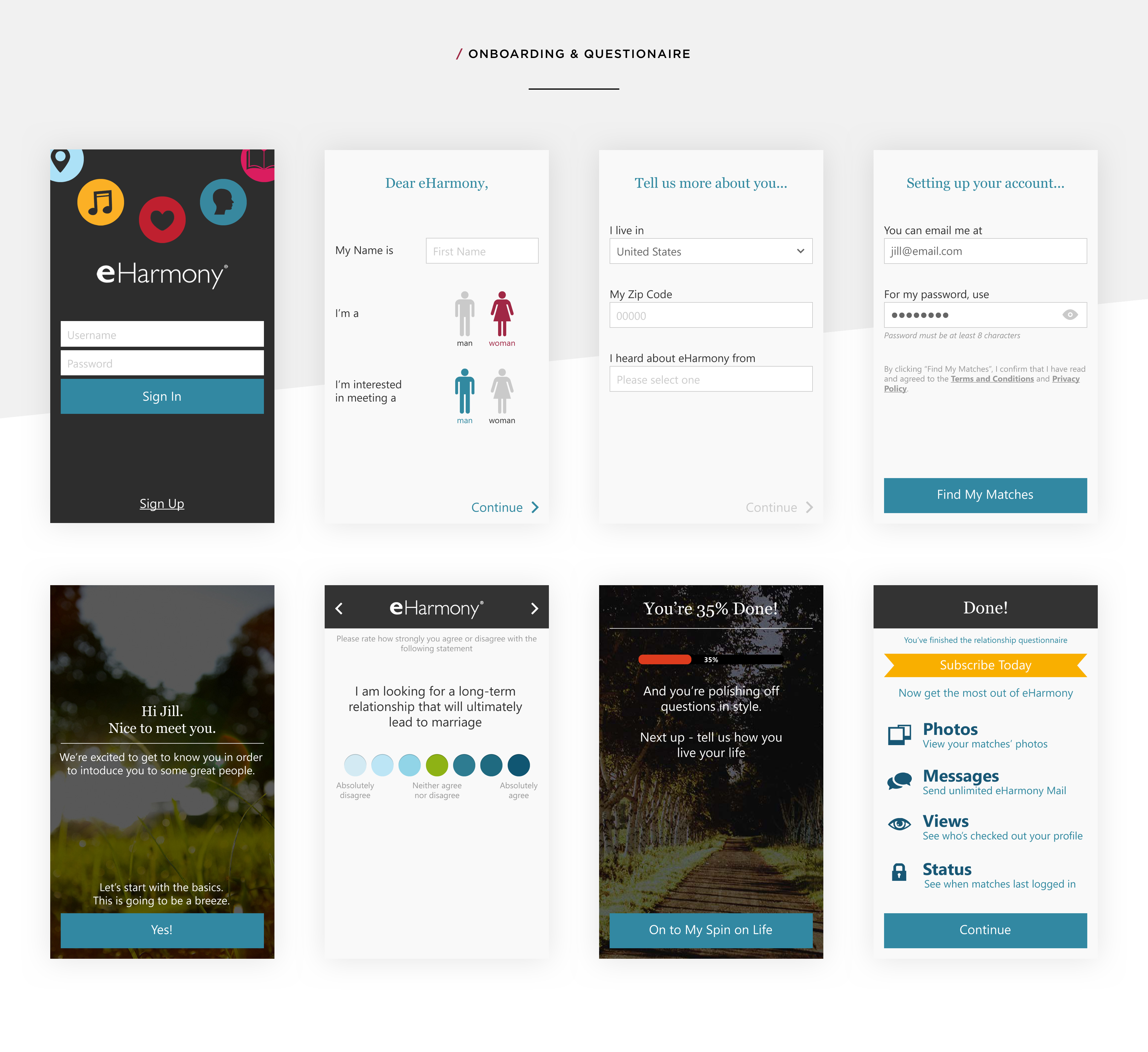
Onboarding & questionnaire, sign in, tell us the basics, and the multi-step relationship questionnaire that has to feel quick even though it's genuinely long.
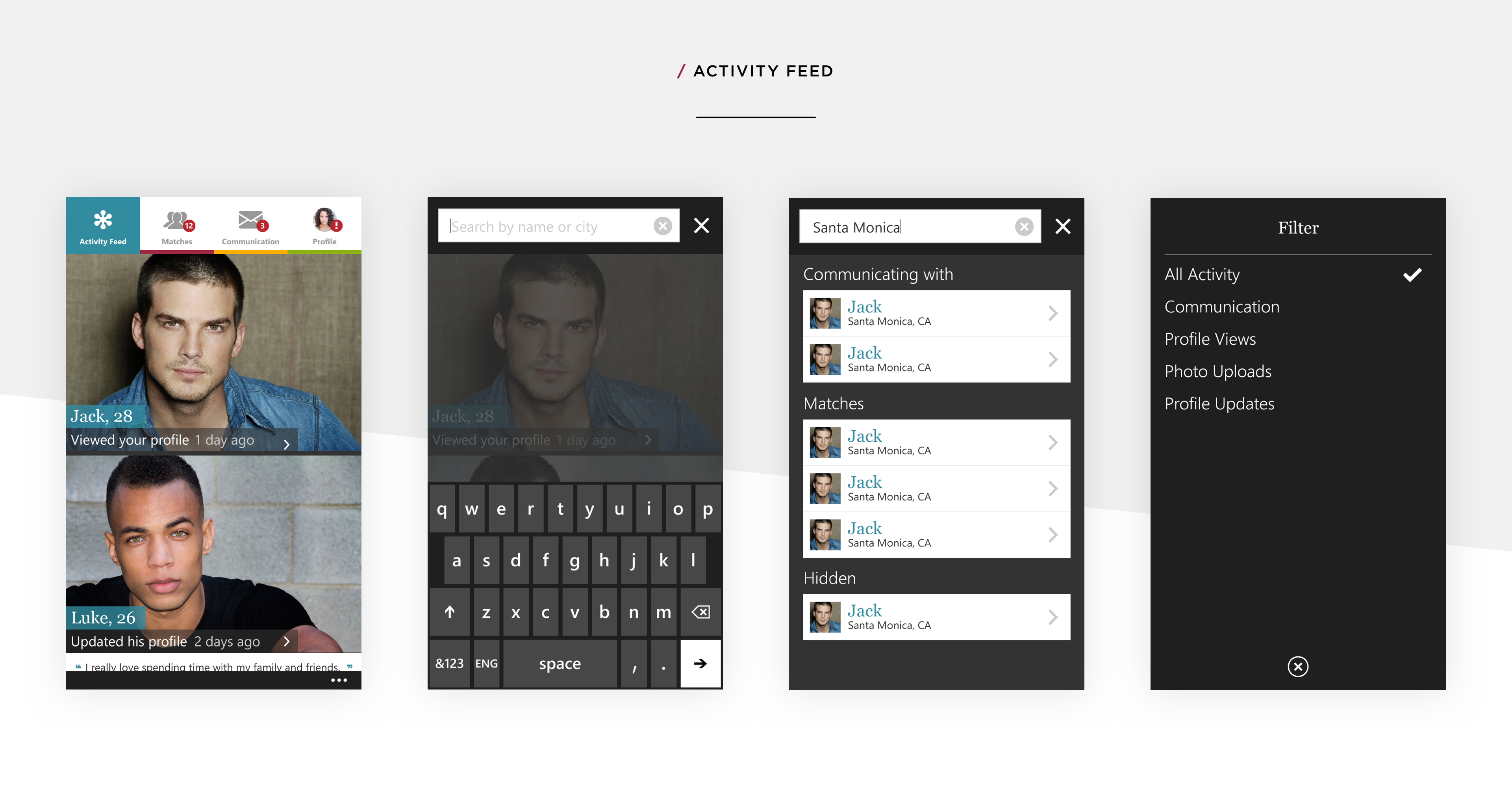
Activity feed (a scannable log of who's viewed or updated their profile, with quick search and an activity filter).
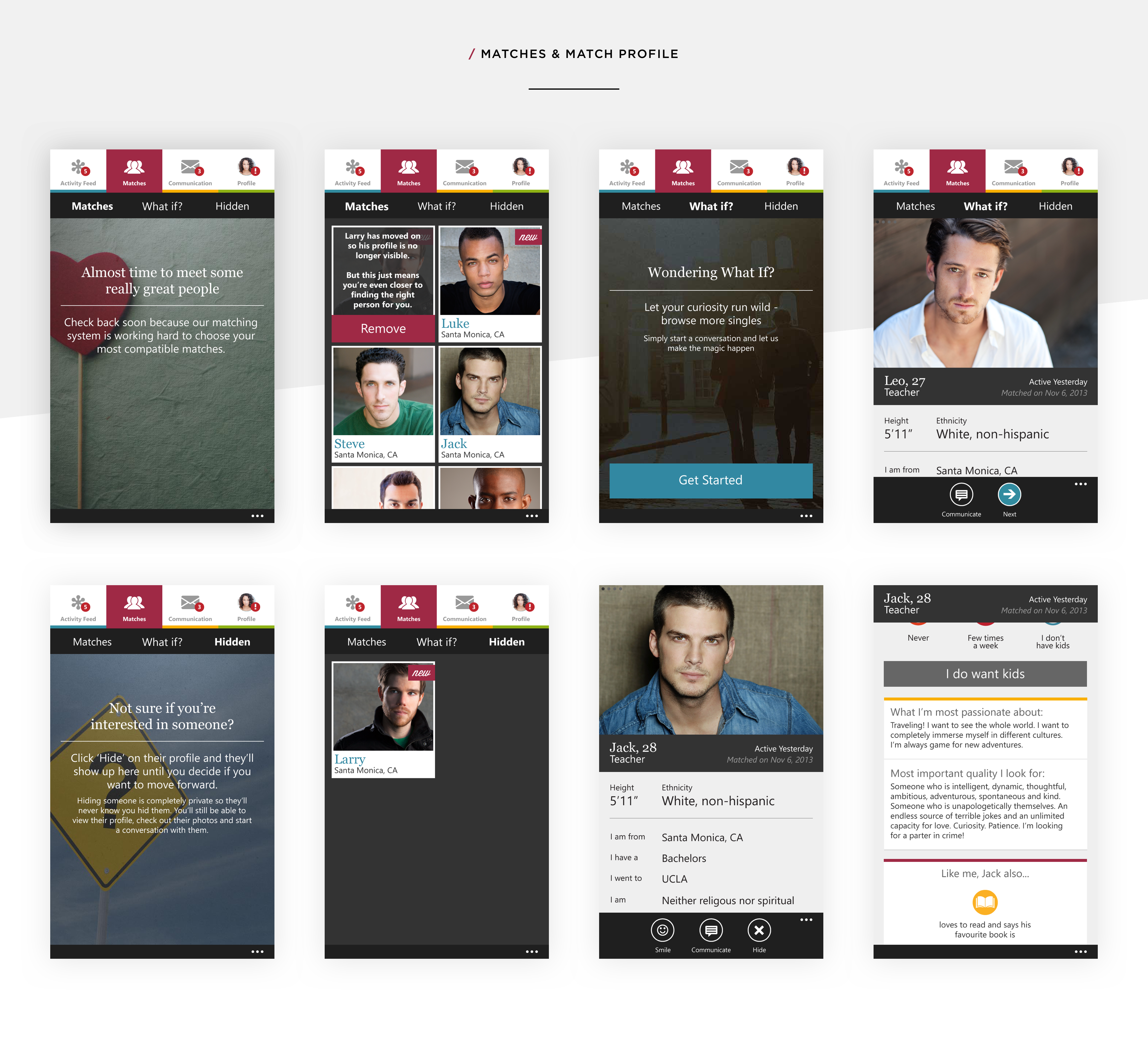
Matches & match profile, browsing daily matches, hiding people you're not interested in, and a full match profile with shared compatibility details.
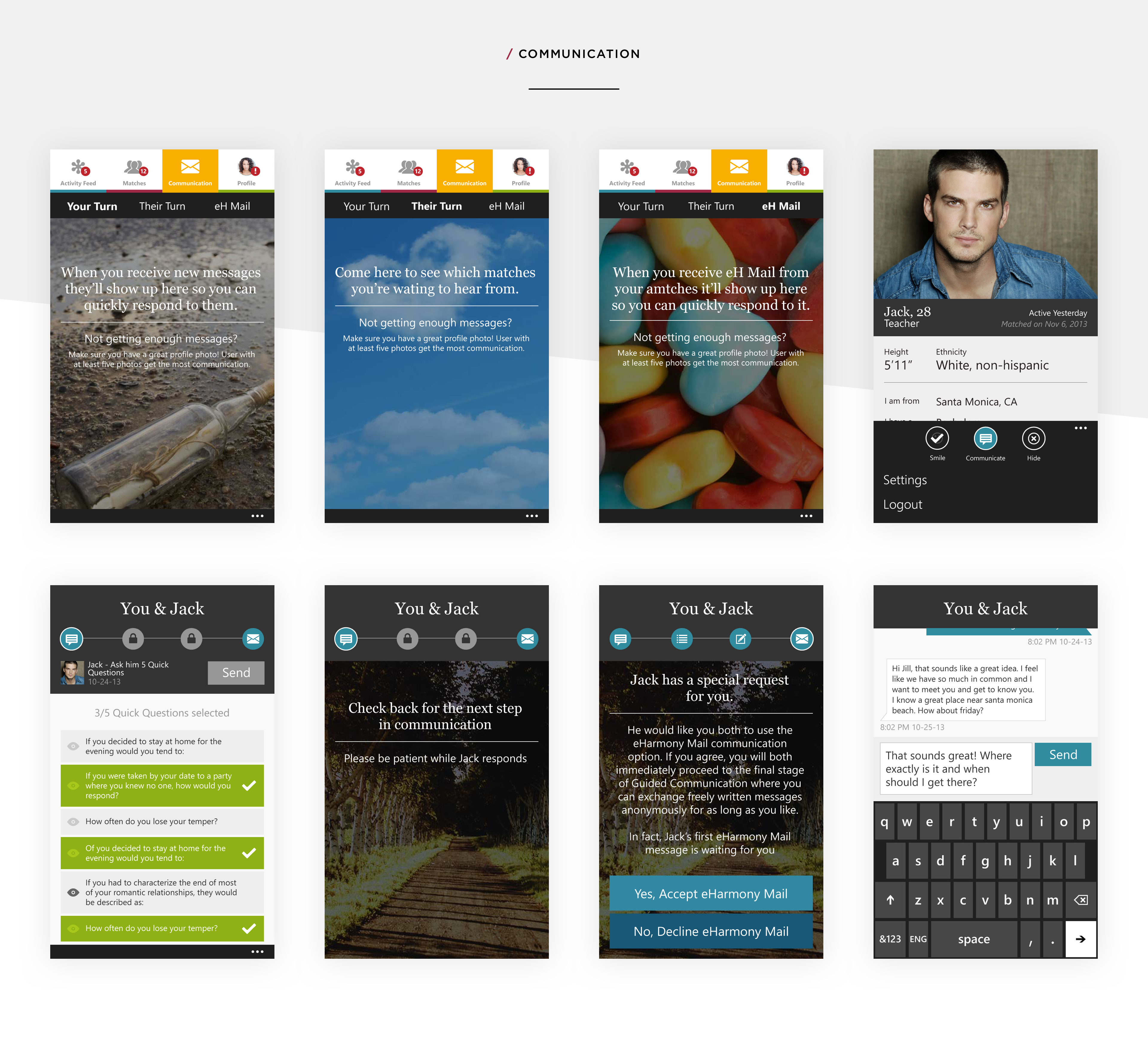
Communication, a guided message flow (Your Turn, Their Turn, eHarmony Mail) that walks two people from anonymous questions to open conversation.
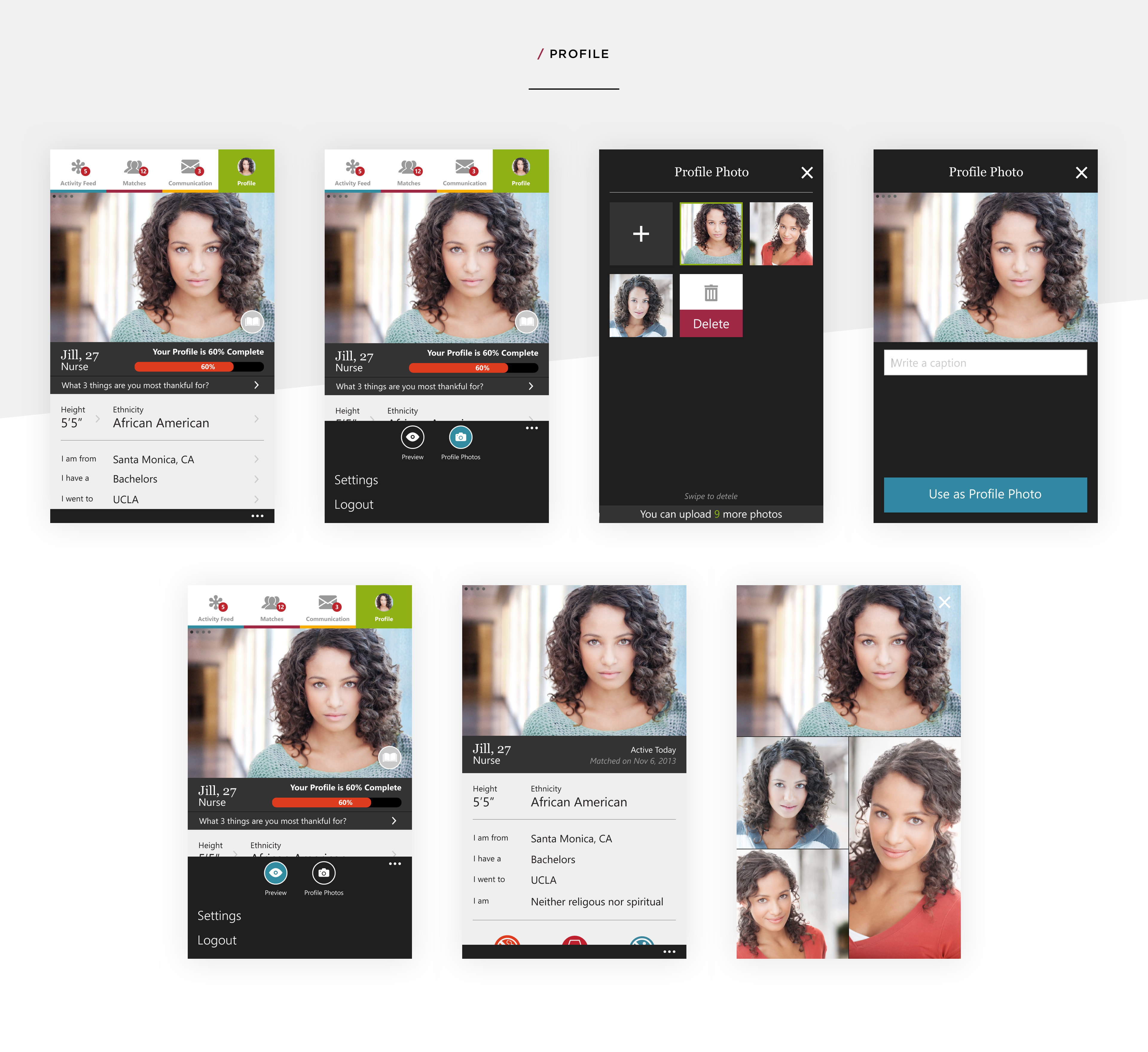
Profile (editing personal details and photos, with a completion meter nudging users toward a fuller profile).
Lead designer on the digital platform redesign for YogaGlo (an online yoga instruction service). Focused on content discovery, class scheduling, and building a practice-supporting experience that kept users coming back week after week.
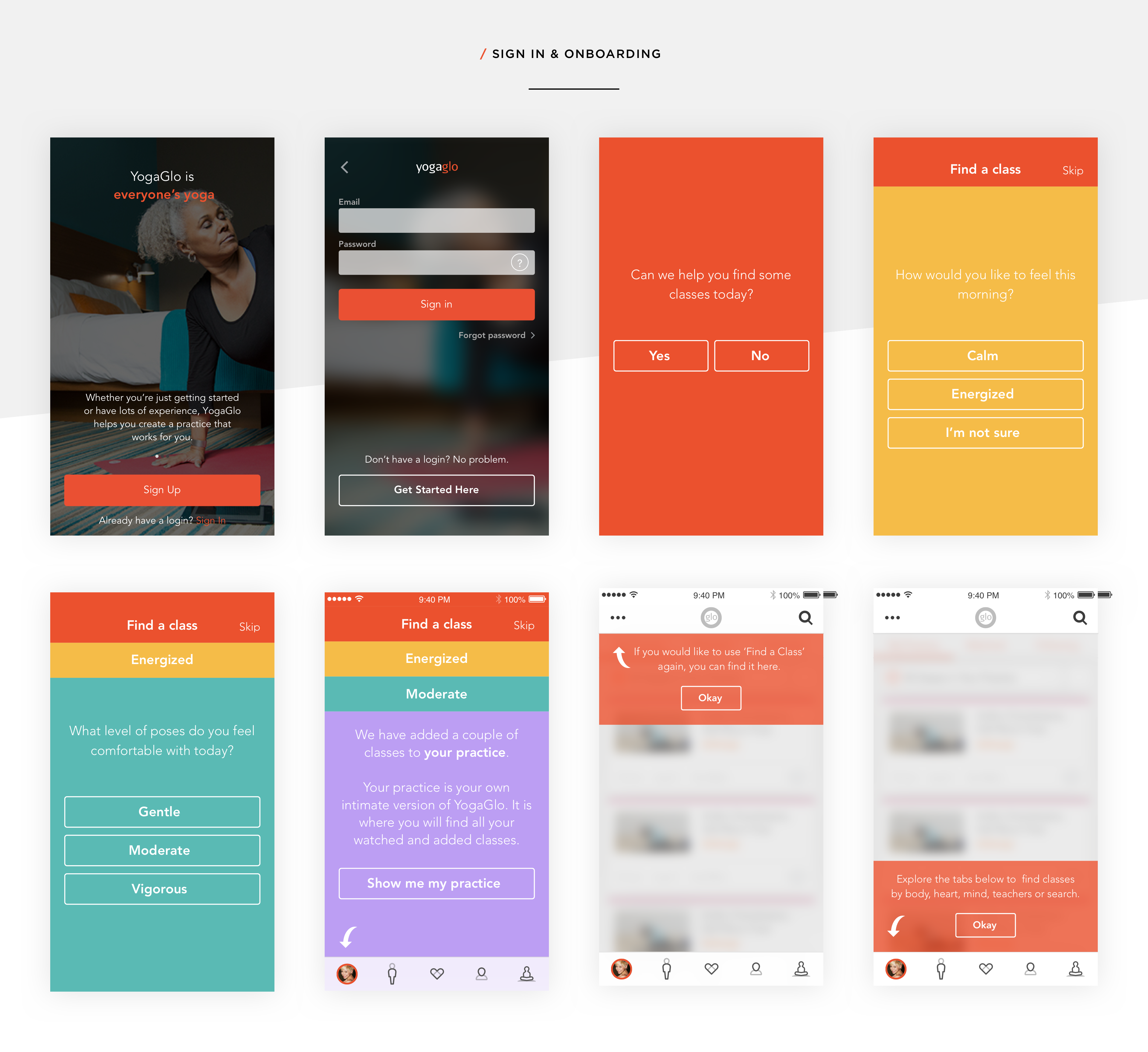
Sign in & onboarding, a quick mood-and-level check-in (energized or calm, gentle or vigorous) that personalizes the very first class recommendations.
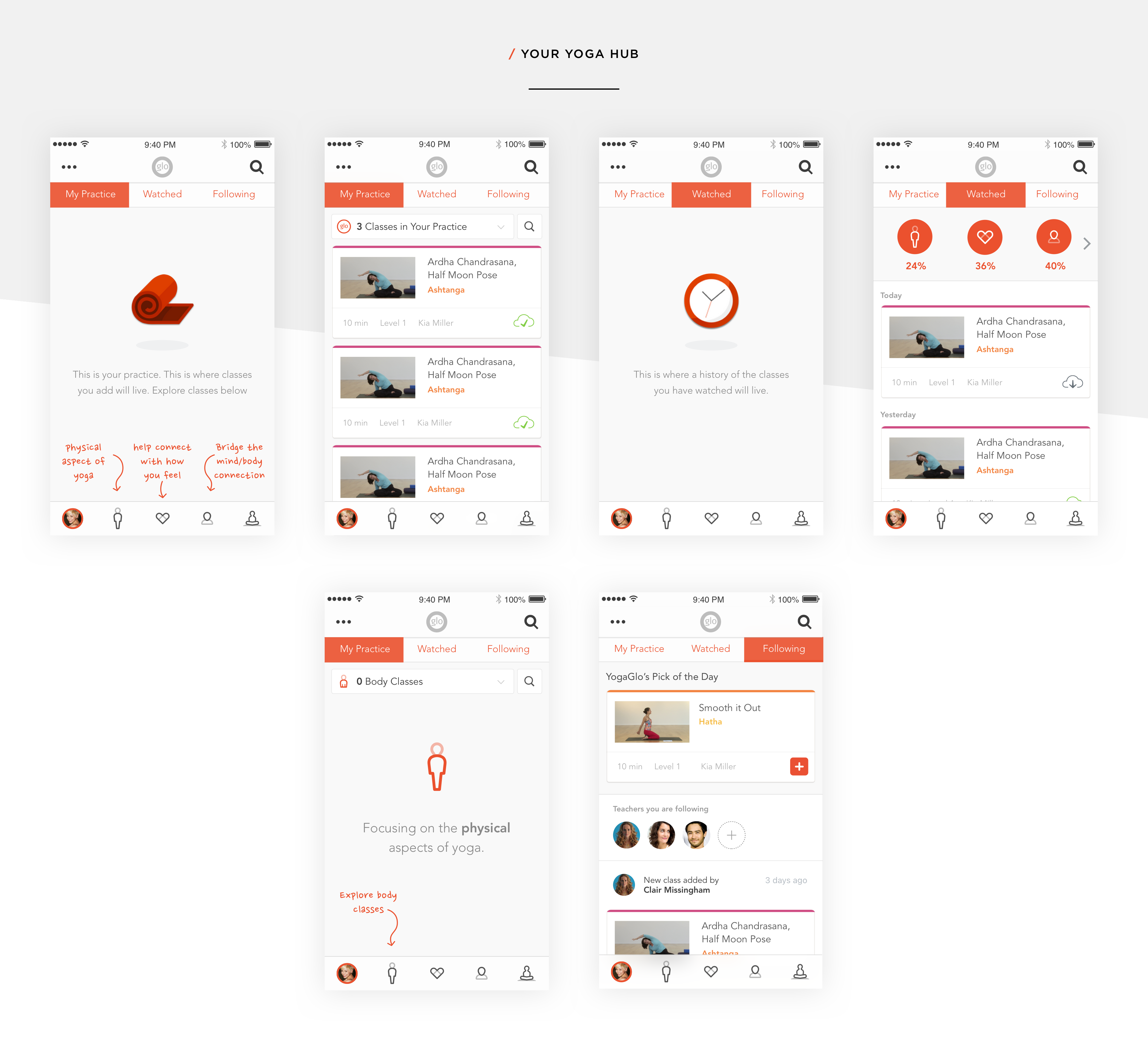
Your yoga hub, practice, watched, and following tabs so a personal practice builds session over session instead of starting from zero.
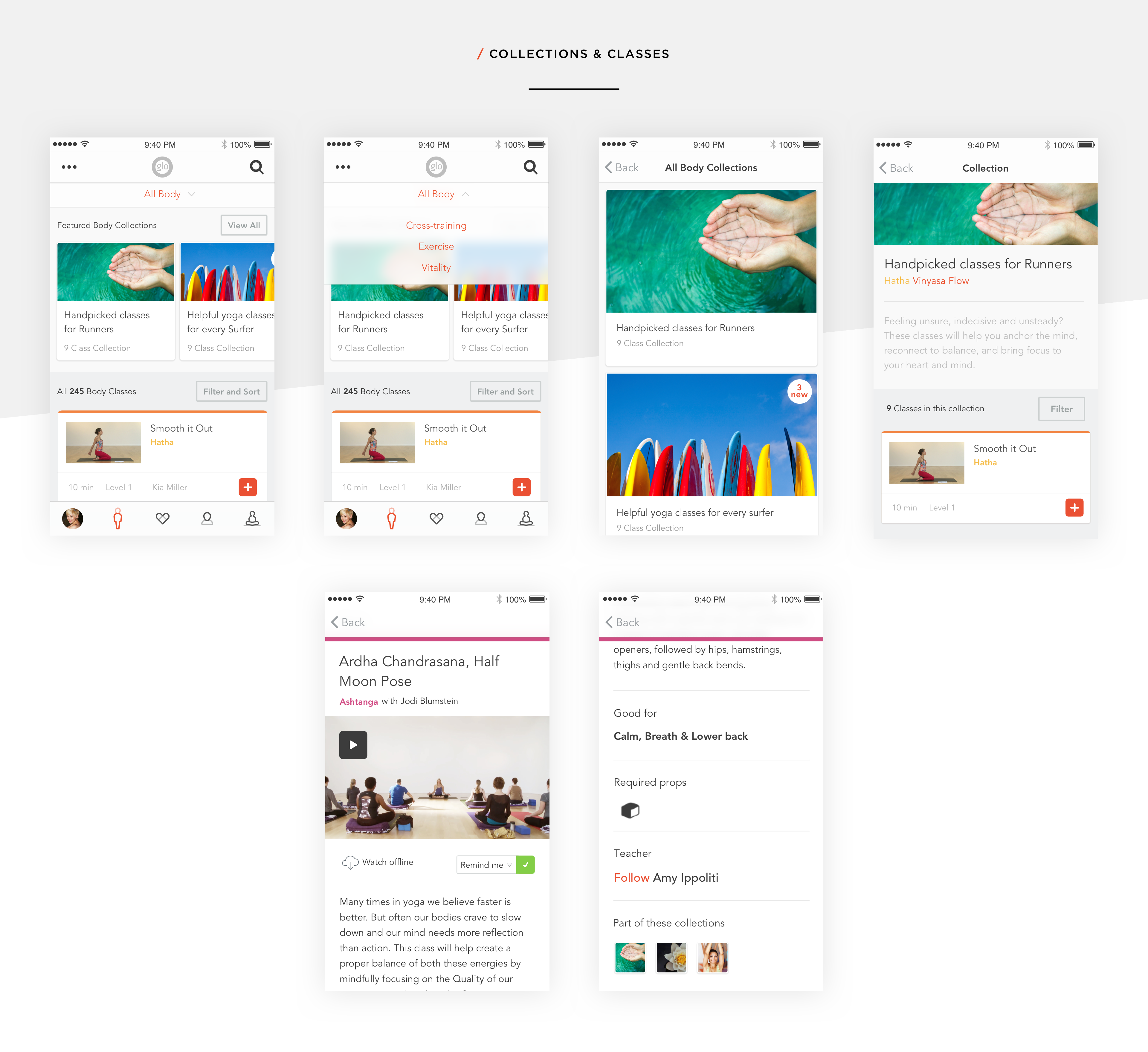
Collections & classes, curated collections by activity or mood, plus a full class detail page with props, teacher, and related collections.
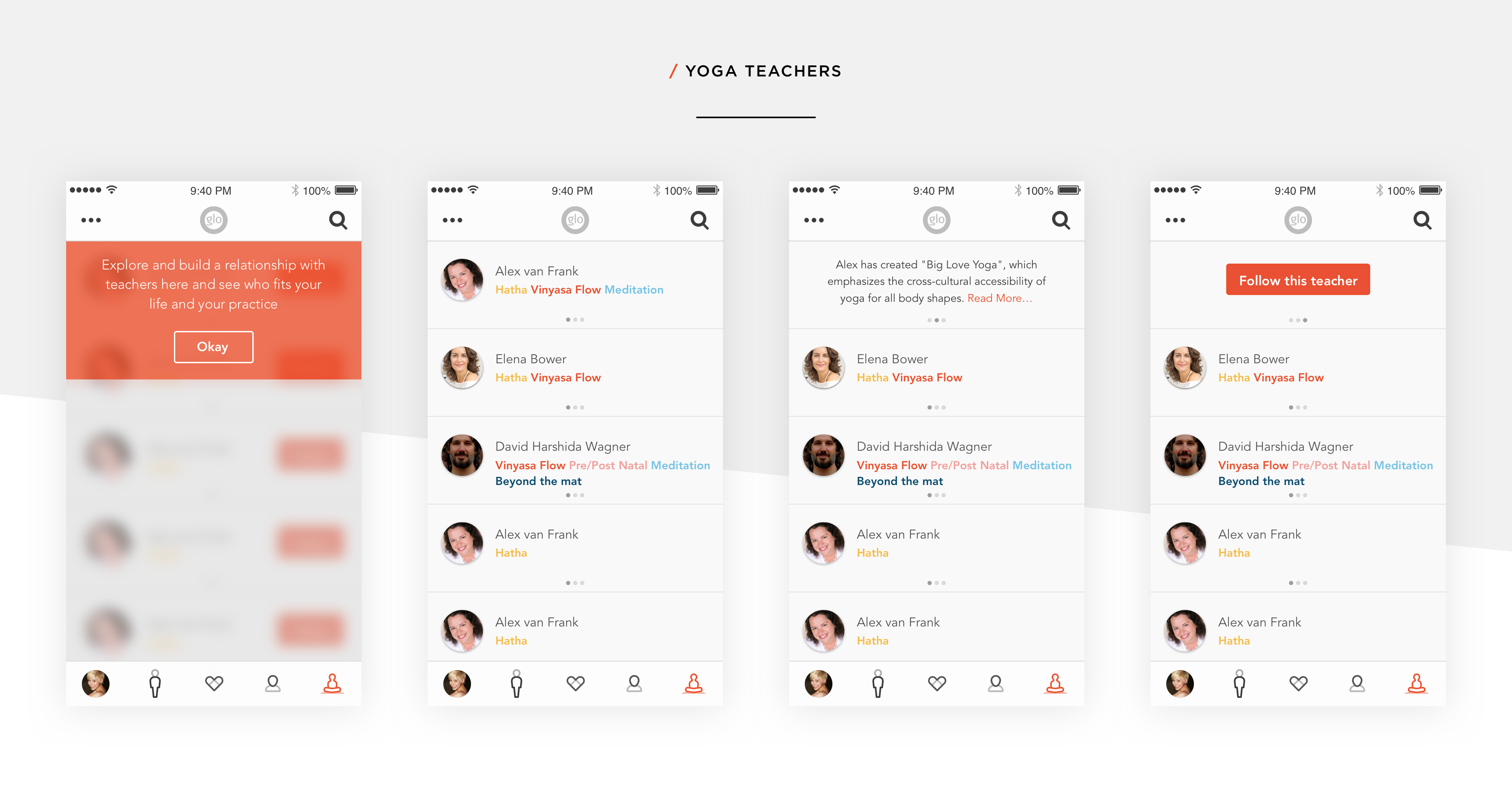
Yoga teachers (instructor profiles to follow, building a relationship with a specific teacher's style over time).
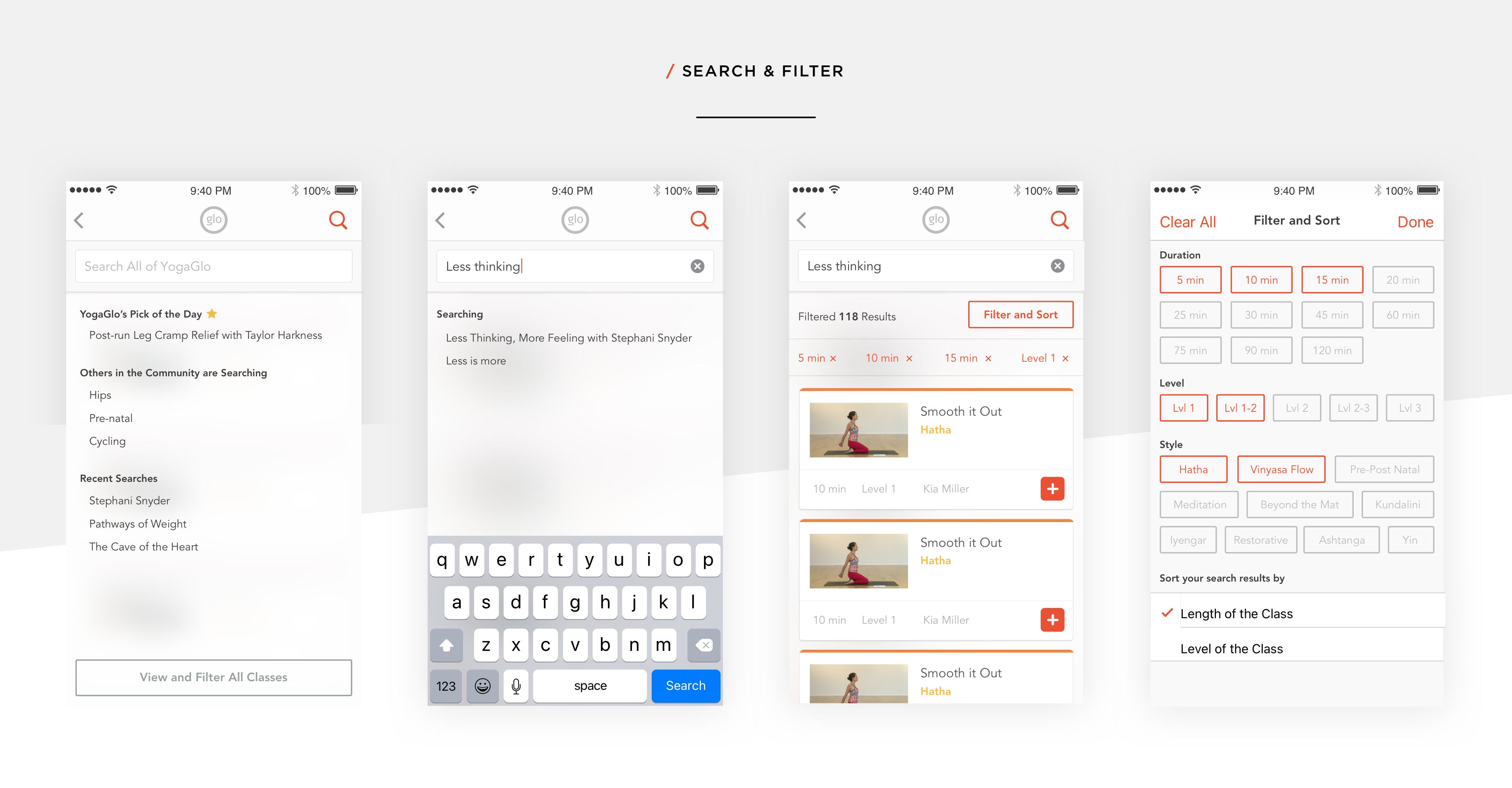
Search & filter (full-library search with duration, level, and style filters to get from thousands of classes to the right one).
Designed a multi-user dashboard for LCAB (Local Content Assurance Bureau) to manage government-funded renewable energy projects (solar and wind installations built under Ontario's Feed-in Tariff program). The dashboard needed to support multiple operator organizations, each managing a portfolio of projects, with clear oversight of maintenance obligations, compliance documents, and energy output data across a permission-layered system.
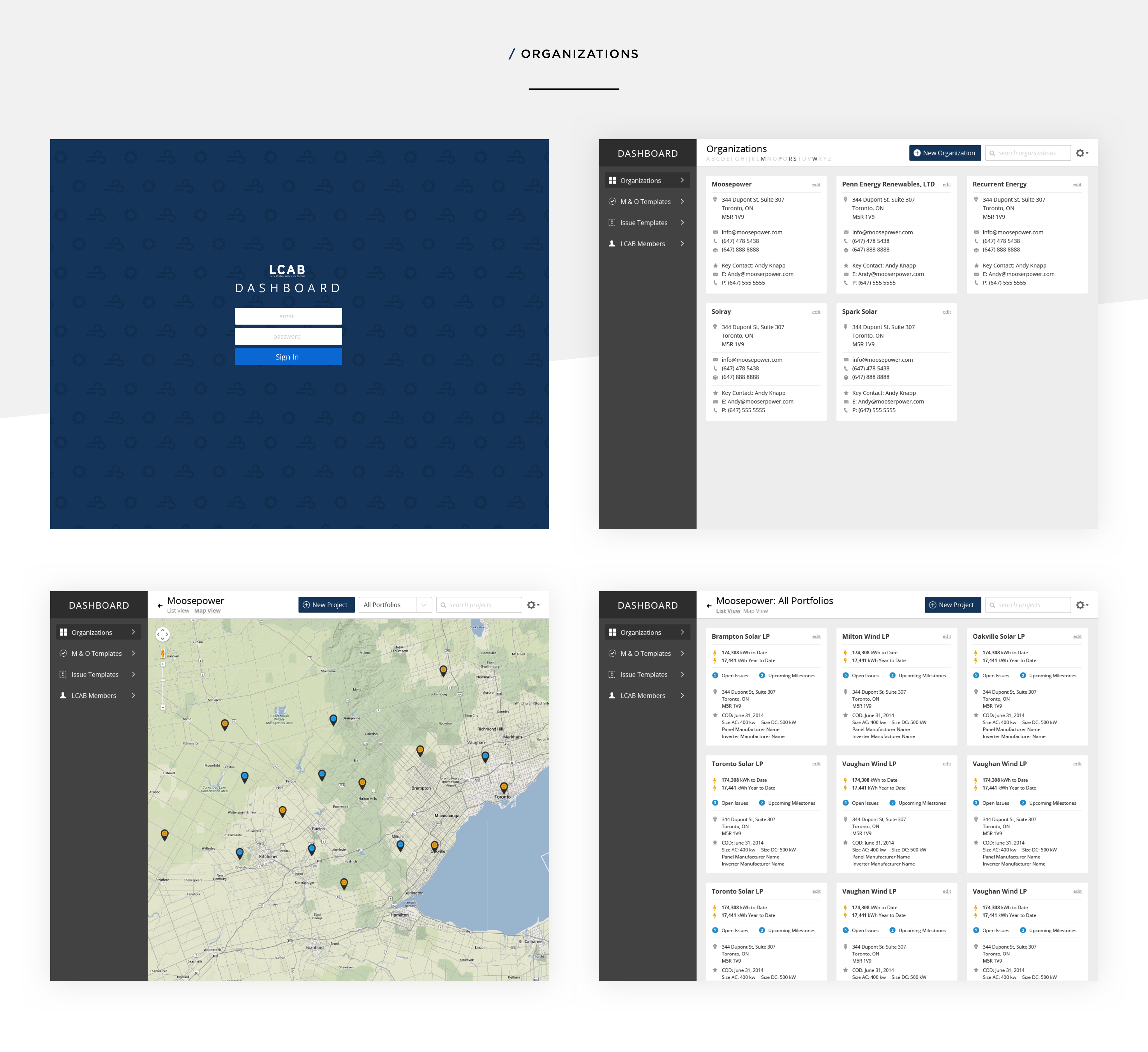
Organizations, the dashboard's entry point: renewable energy operators and their solar and wind project portfolios, plotted by location across Southern Ontario.
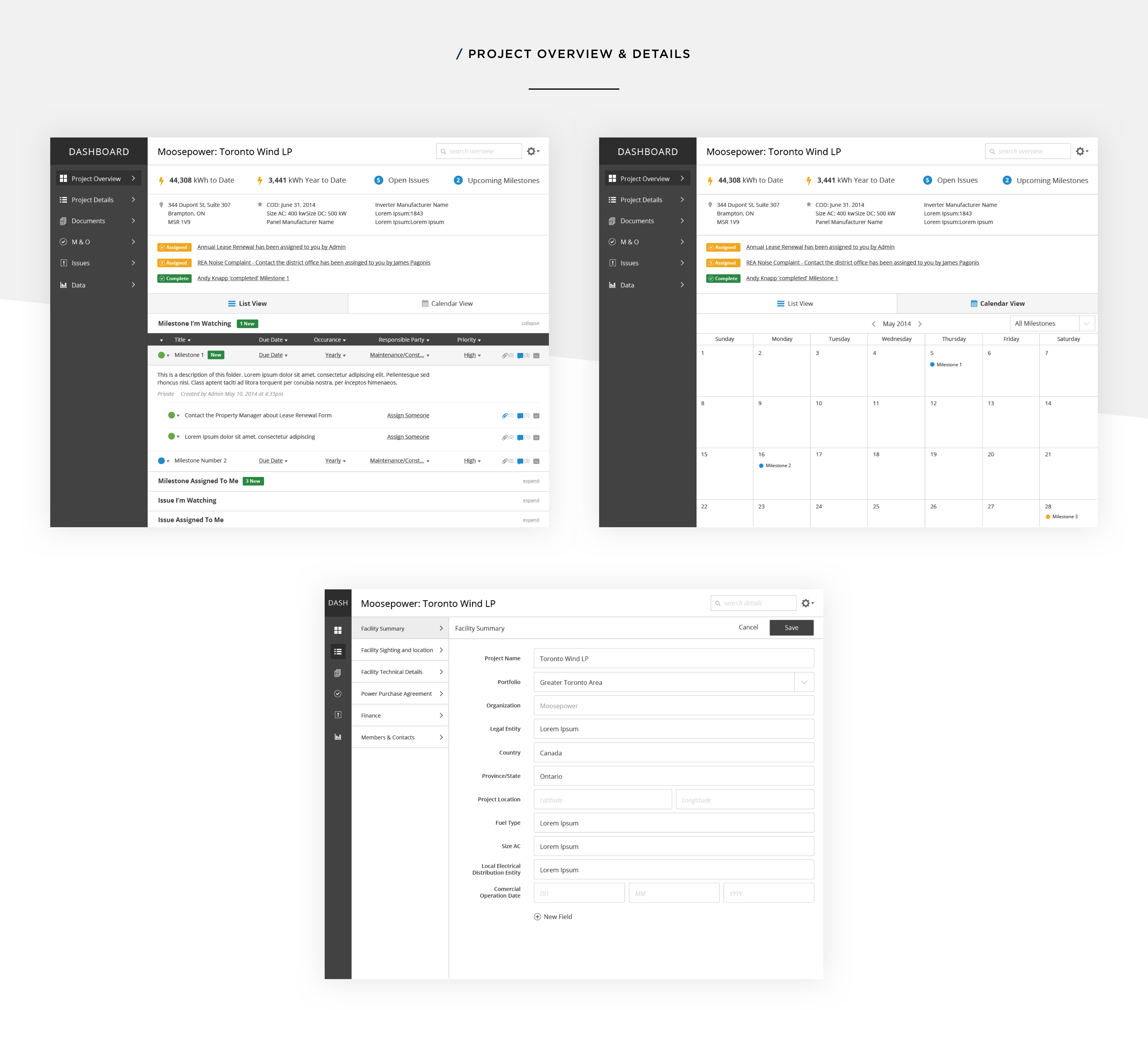
Project overview & details, live output, open issues, and upcoming milestones for a single project, plus an editable facility record for its technical specs.
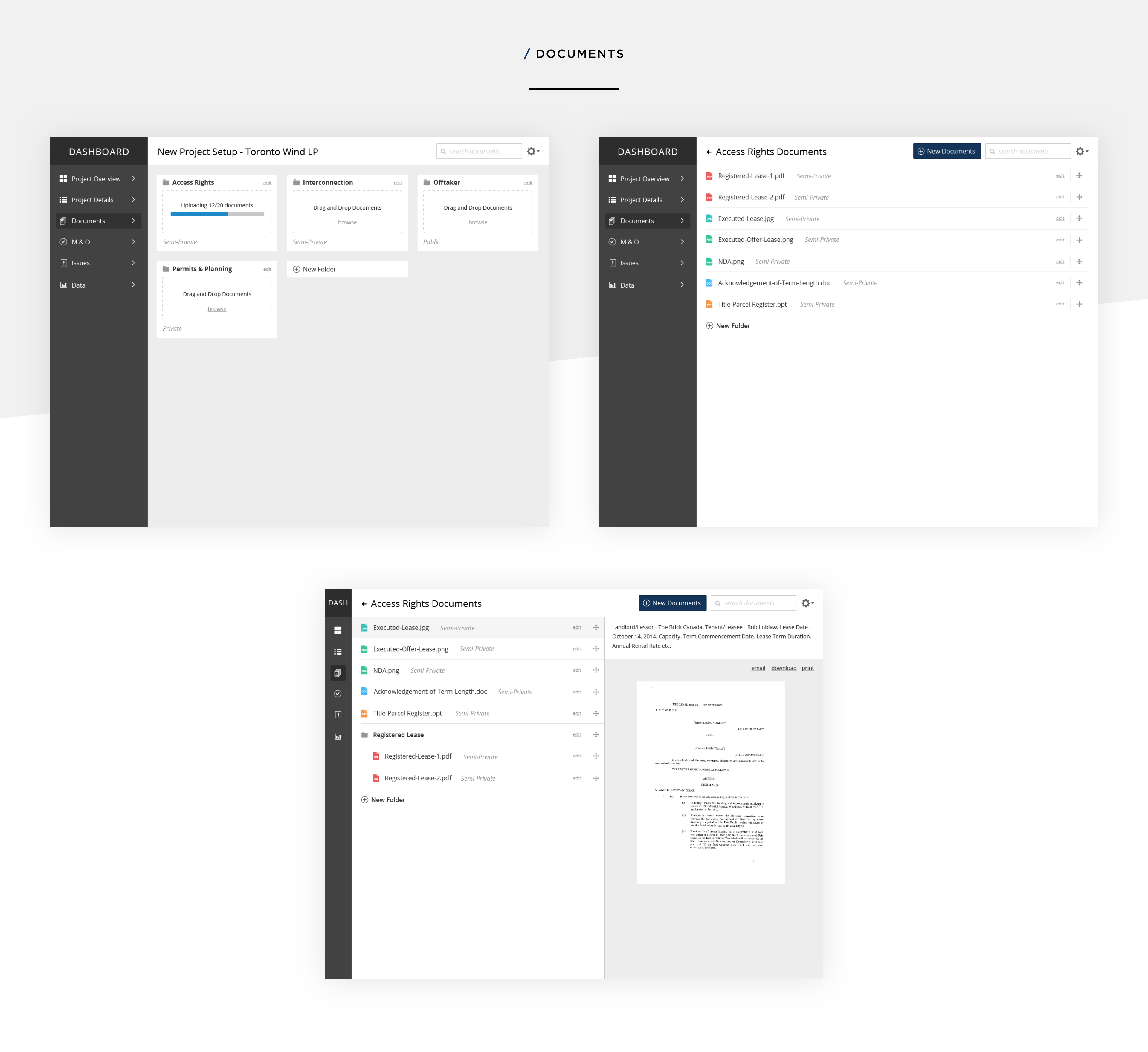
Documents, access rights, leases, and permitting paperwork organized by folder, each file tagged private, semi-private, or public.
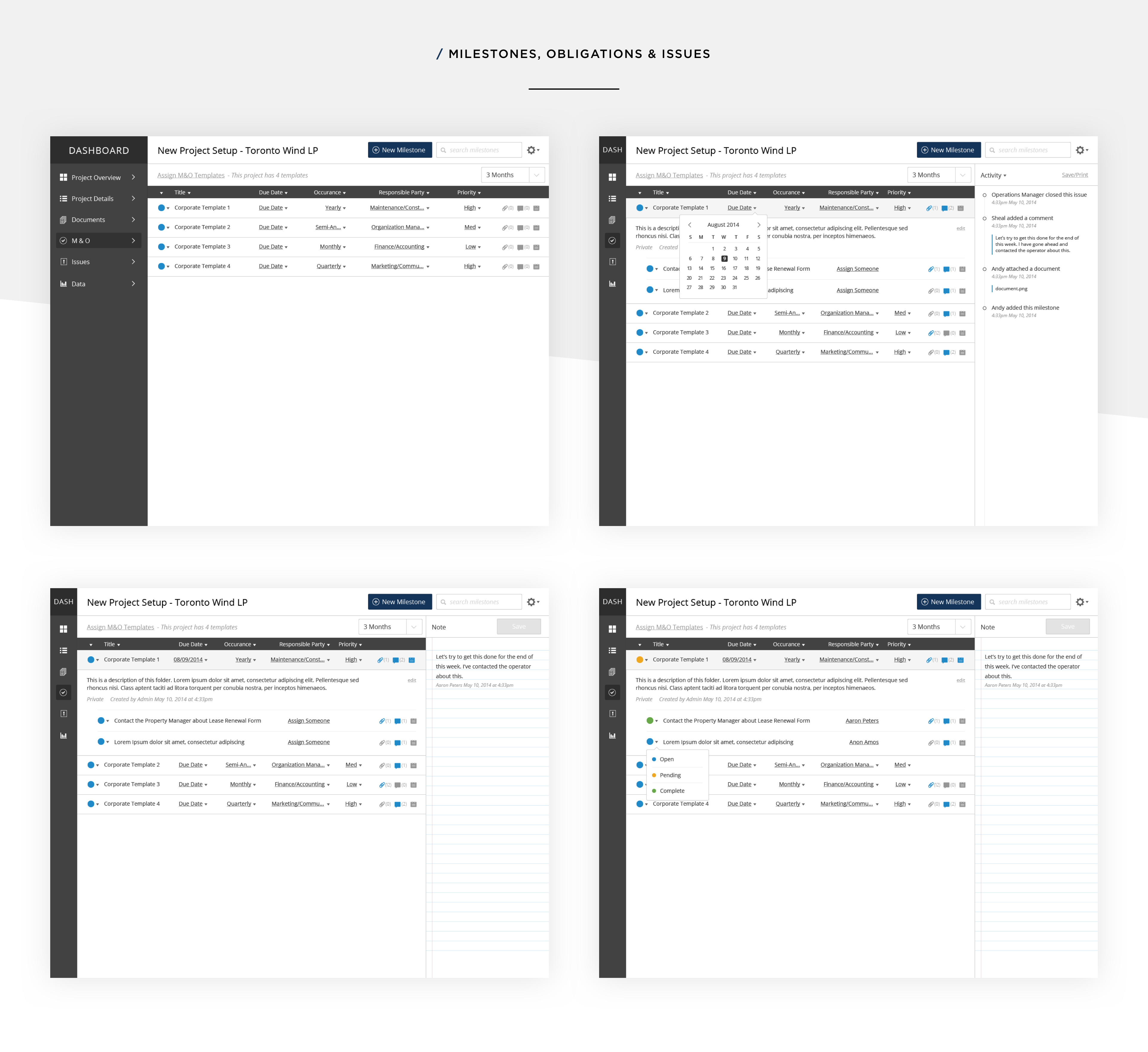
Milestones, obligations & issues, recurring maintenance and operations tasks assigned to responsible parties, tracked against due dates with a live activity log.
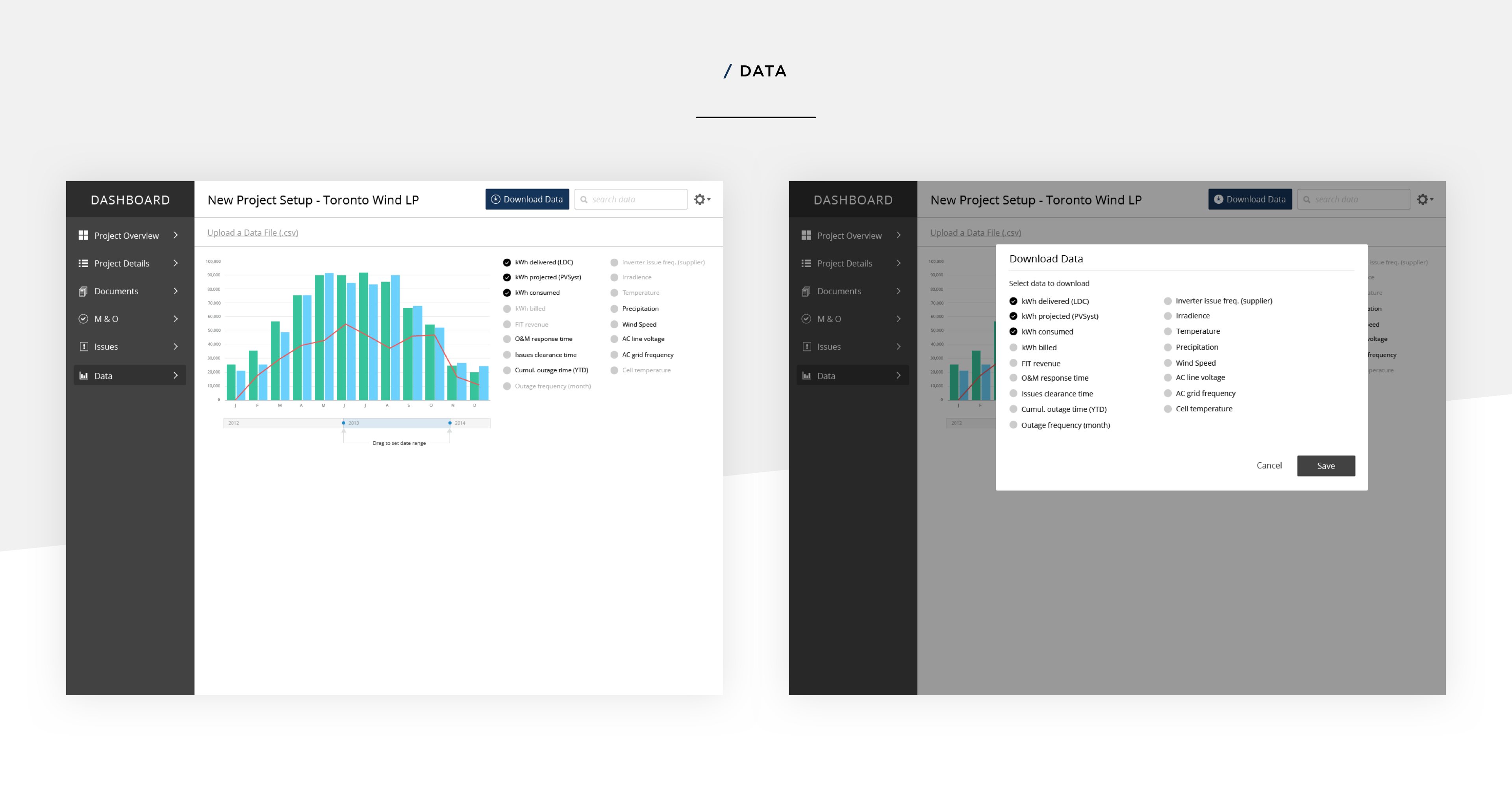
Data, delivered vs. projected output charted over time, with a configurable export for reporting.
Get in touch
I'm currently open to new opportunities. If you're looking for a Staff Product Designer who brings clarity to complex problems, let's talk.
 Nascent Digital (2013–2015) · UX/UI Designer (Lead)